
Quick Summary: Wired vs GPS at a Glance
| Feature | Wired Invisible Fence system | GPS Invisible Fence system |
|---|---|---|
| Typical Range | Up to 25 acres (wire loop) | Up to 1,000 acres + (no physical limit) |
| Reliability | Very high—signal locked to buried wire | High—may drift ± 3 ft in heavy cloud cover |
| Installation Time | 4–6 hrs (trenching & wire bury) | 1–2 hrs (satellite mapping) |
| Up‑Front Cost* | Can be lower for small properties, but larger and more complex installations can come with higher initial cost. | Can be higher than small, simple wired systems, but can save on maintenance costs later. |
| Best For | Regular lots, dense landscaping, HOAs | Large or changing yards, seasonal boundaries |
*Cost comparisons based on 2025 average Great Lakes region installations.
How Wired Invisible Fencing Works
 A wired
Invisible Fence® Brand system
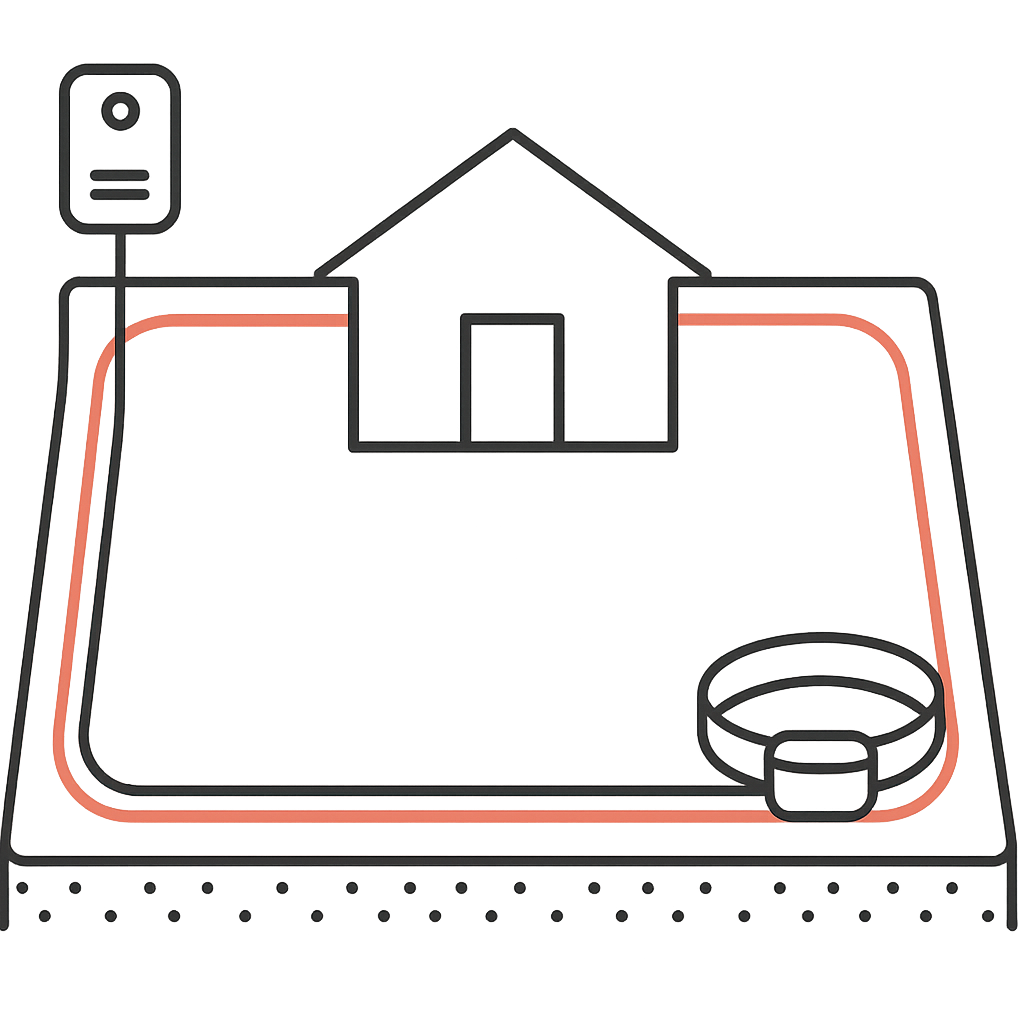
uses a continuous loop of insulated wire buried a few inches underground.
The wire carries a low‑level radio signal from a base transmitter. When your pet’s collar receiver
approaches
the wire, it emits an audible warning followed—if necessary—by a gentle static correction. Because
the signal
is locked to the physical wire, the boundary is precise and unaffected by weather or satellite
availability.
A wired
Invisible Fence® Brand system
uses a continuous loop of insulated wire buried a few inches underground.
The wire carries a low‑level radio signal from a base transmitter. When your pet’s collar receiver
approaches
the wire, it emits an audible warning followed—if necessary—by a gentle static correction. Because
the signal
is locked to the physical wire, the boundary is precise and unaffected by weather or satellite
availability.
Pros of Wired Systems
- Rock‑solid reliability—signal never drifts or weakens.
- Custom boundary shapes—hug flower beds or exclude pools and gardens.
- Works in dense landscaping and heavy tree cover where GPS can be spotty.
- Lower collar cost than most GPS models; batteries last longer.
Cons of Wired Systems
- Installation requires trenching, which can disturb the lawn (though we use a trenchless blade for minimal impact).
- Harder to adjust later—moving flower beds or expanding the yard means re‑burying wire.
- Wire breaks (e.g., from aeration or digging) require pinpoint troubleshooting.
How GPS Invisible Fencing Works
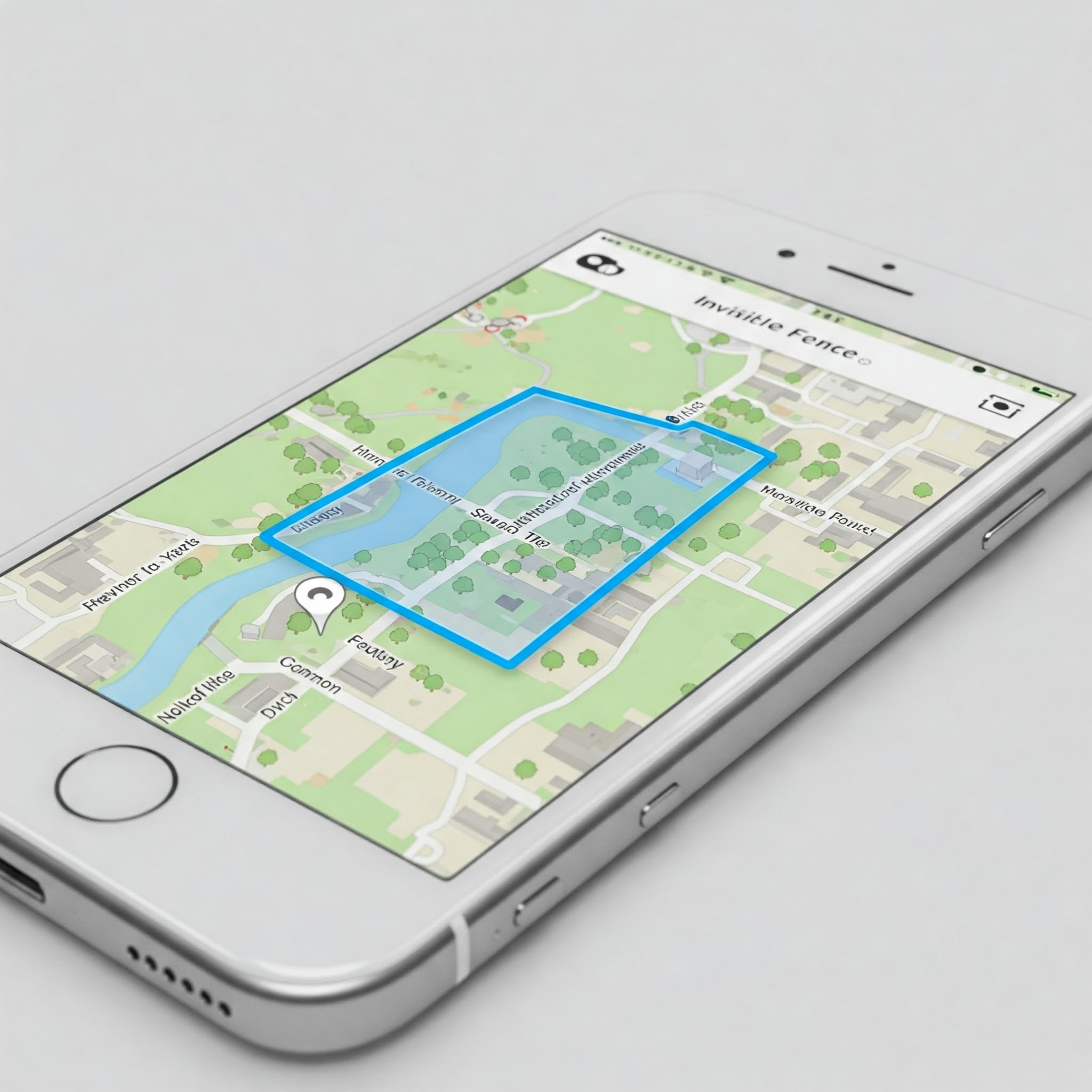
A GPS Invisible Fence® system creates a virtual boundary by locking your pet’s collar receiver to a cluster of satellites. Instead of burying wire, we “draw” the safe zone on a tablet or smartphone app. When the collar nears the virtual line, it delivers the same audible warning and gentle static correction used by wired systems, but without any ground disturbance—perfect for large estates, wooded lots, or properties that change with the seasons.
Pros of GPS Systems
- No digging required—installation is fast and lawn‑friendly.
- Instant boundary edits—adjust zones with a few taps on the app.
- Unlimited acreage—ideal for farms or irregular‑shaped properties.
- Wire‑break issues eliminated—nothing underground to repair.
Cons of GPS Systems
- Possible signal drift of up to ±3 ft during severe weather or dense canopy.
- Higher collar cost and more frequent charging (every 1–2 weeks).
- May require clear sky view—performance can drop near tall buildings or metal roofs.
- Slightly higher upfront price compared with most wired installs.
Which Option Fits Your Property?
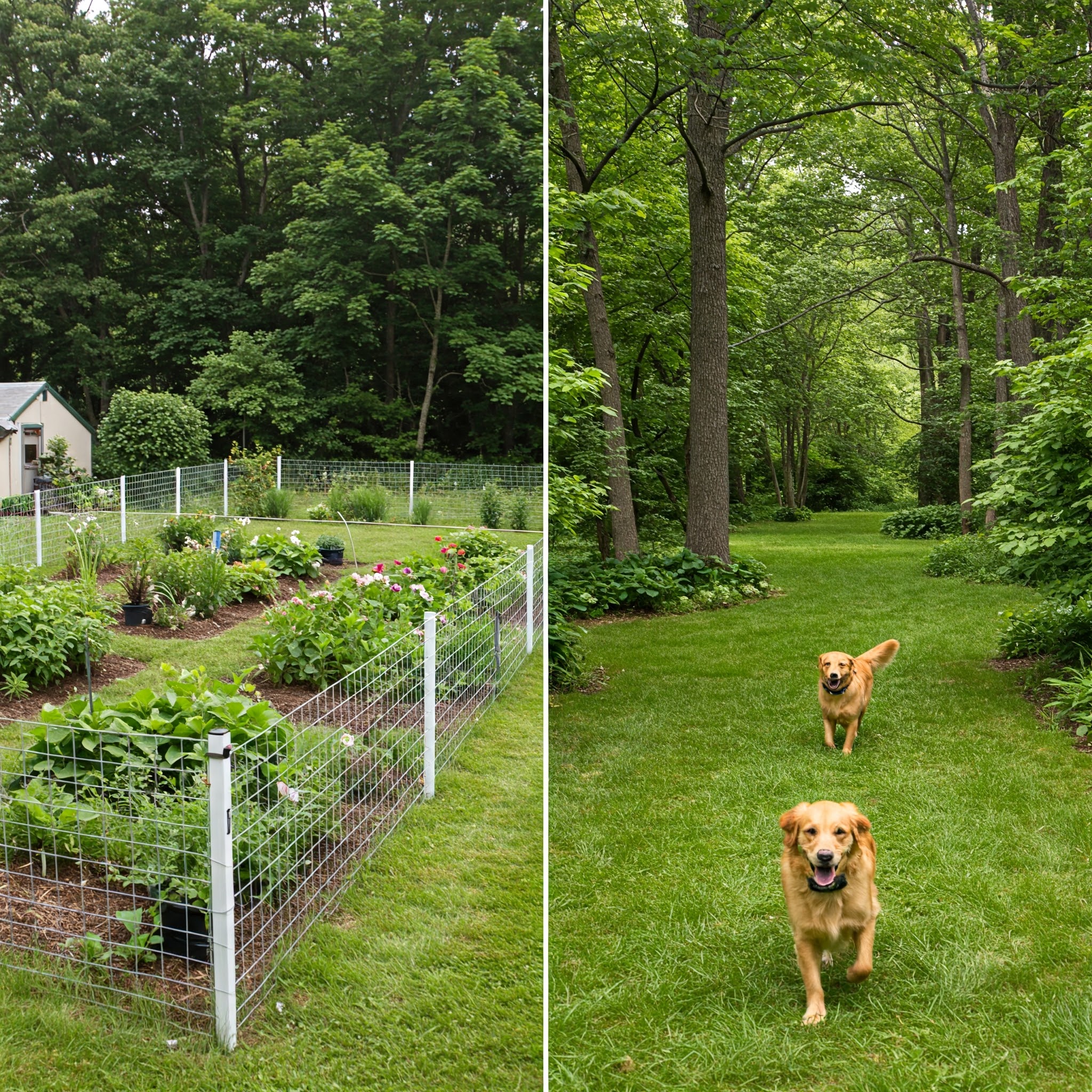
Choosing the right Invisible Fence® technology comes down to your yard’s layout, obstacles, and how often you expect your boundary to change. Use the checklist below to see where you fit:
Wired is usually better if…
- Your lot is < 2 acres and roughly rectangular.
- You have landscaping beds you want to hug precisely.
- Tall trees or metal sheds might block satellite signals.
- You prefer set‑and‑forget reliability with minimal collar charging.
GPS shines when…
- Your property is large or irregular‑shaped (> 2 acres).
- You want to adjust zones seasonally—e.g., open the lakefront in summer.
- No‑dig installation is important (historical lawn, rental, rocky soil).
- You plan to move in the next few years and want to take the system with you.
Still unsure? Our team can map both options during a free on‑site consultation and show you live signal tests before you decide.
Training Considerations for Each Technology
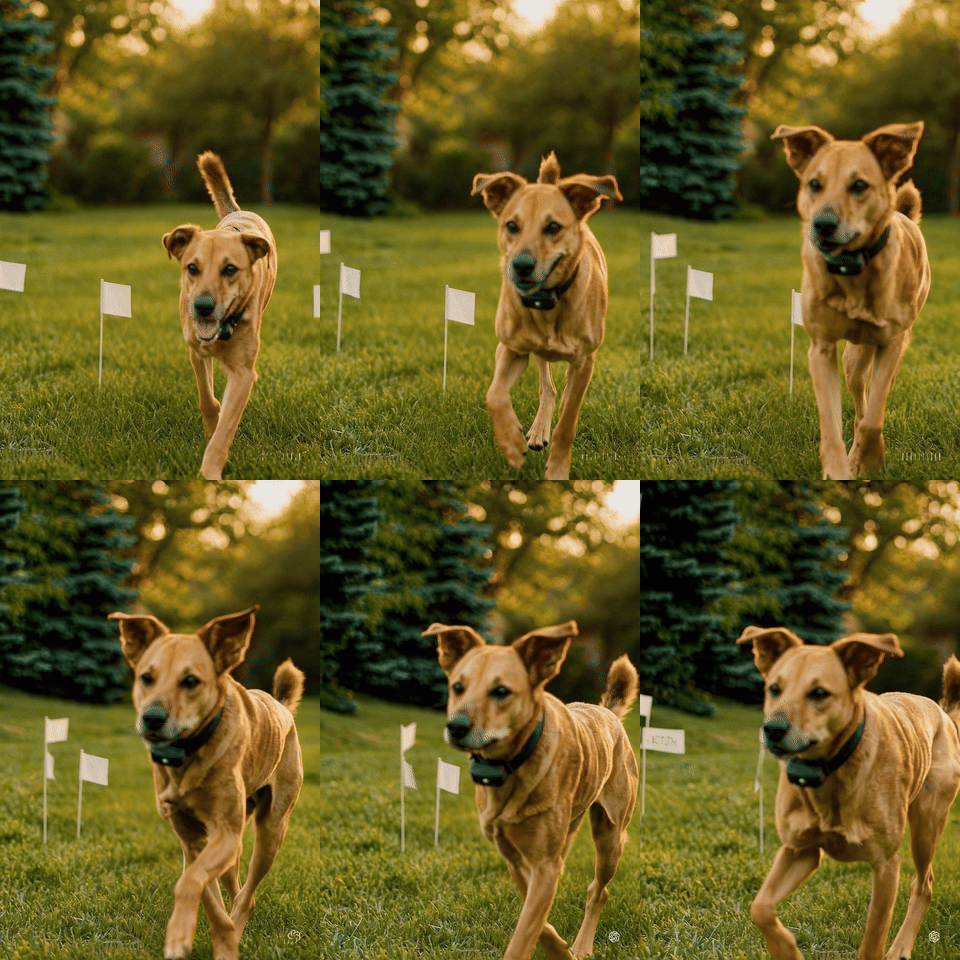
Whether you choose a wired or GPS Invisible Fence® system, consistent, positive‑reinforcement training is the key to long‑term success. Here’s how the approach differs:
Wired System Training
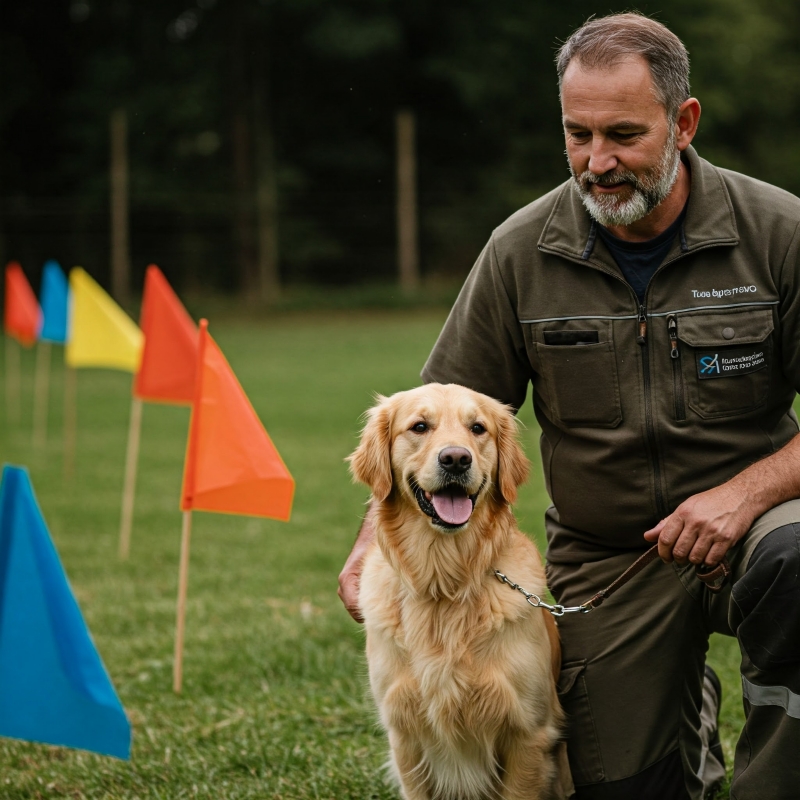
- Flag Day 1: We place white boundary flags every 8–10 ft to give your dog a clear visual cue.
- Controlled Exposures: Using a leash, we guide your dog toward the flags and cue a retreat response as the collar beeps.
- Repetition (Days 2–7): Two short sessions per day reinforce stopping and retreating.
- Flag Removal: After one week of consistent success, we remove half the flags, and all flags by the end of week 2.
GPS System Training
- Virtual Flags: The collar’s tone signal replaces physical flags, so we rely heavily on audible cues and praise.
- Wide Buffer Zone: Early sessions start 5 ft inside the GPS line to account for any signal drift.
- App Adjustments: We fine‑tune the virtual boundary in real time as your dog learns the retreat response.
- Battery Check‑ins: Daily collar checks ensure the battery stays above 50 % during the first two weeks of learning.
Pro Tip: Training sessions should be short (5–7 minutes), upbeat, and end on a positive note. Consistency trumps intensity—two micro‑sessions a day outperform one long drill.
Cost Breakdown (2025)
| Expense Category | Wired System | GPS System |
|---|---|---|
| Equipment | Lower base price; additional wire increases material cost only slightly. | Collar hardware is pricier; no wire to purchase. |
| Installation | Requires labor for trenching and burying wire. | Quicker setup—minimal lawn work, lower labor share. |
| Training | Comparable hands‑on training sessions. | Comparable hands‑on training sessions. |
| Ongoing Maintenance | Occasional wire break repairs; long‑life collar batteries. | No wire repairs; collar batteries replaced/charged more frequently. |
| Total Up‑Front Cost | Generally lower. | Generally higher (mainly due to collar tech). |
Bottom line: Wired systems start out less expensive but may require physical repairs over time, whereas GPS systems cost more up front yet avoid wire‑related fixes. Battery habits and property changes will ultimately influence your lifetime spend.
Great Lakes Containment & Training’s Recommendation
After installing hundreds of systems across Northern Michigan, the U.P., and the surrounding Great Lakes region, we’ve learned that no single technology wins every time. Here’s our rule of thumb:
- Choose Wired if you want iron‑clad boundaries for a modest‑sized yard and don’t expect to redesign your landscape any time soon.
- Choose GPS if you have a large, irregular, or evolving property—or you simply prefer the flexibility of editing zones from your phone.
- Still torn? We happily demo both options during a free on‑site assessment so you can see signal reliability, collar fit, and training protocols first‑hand.
In many cases, our clients start with a wired system for the primary yard and add a GPS collar when they buy an adjacent lot or open new acreage to their pets. Because we service all systems, we’ll be there to upgrade or combine technologies whenever you need.
FAQ
Will heavy snow or rain affect system performance?
Wired boundaries are unaffected by weather once the ground is frozen. GPS collars remain reliable, but you may see up to a three‑foot drift during extreme cloud cover. We offset this during training so pets still retreat well inside the safe zone.
Can I use one collar for both wired and GPS zones?
Yes. Invisible Fence® now offers multi‑mode collars that store both technologies. Many clients start with a wired yard zone and add a large GPS pasture later—one collar handles both.
Is there a limit on how many dogs can share the same boundary?
No—each pet simply needs its own receiver collar. We’ve trained families with five dogs on a single wired loop and larger kennels running a GPS boundary for 15+ dogs.
Ready to Protect Your Best Friend?
Whether a precise wired loop or a flexible GPS boundary fits your yard, our certified team can have your pet safely exploring in just a few days. Let’s design the perfect Invisible Fence® solution together—training included.

Schedule Your Free Consultation
Learn More About Our Containment Services